
The Apex Guide to Deck Materials in San Antonio: Composite, Cedar, and Treated Pine
What each decking material does well, what maintenance it needs, and how to choose the right one for your home.
Choosing the best deck material for your San Antonio home comes down to three things: how much upkeep is right for you, how the finished deck will handle sun and heat, and your budget. At Apex Deck Co., we build with the three materials that perform best here: composite, cedar, and treated pine.
Each one is a good choice for the right homeowner. This guide walks through what each material is, how it holds up in South Texas, and the questions we ask before recommending one. We are a family-owned company with over 20 years of combined staff experience building decks across San Antonio, and these are the same conversations we have at every estimate.
What Matters Most When Choosing Deck Materials in San Antonio?
The best deck material for your family is the one that matches your preference for ease of maintenance; can handle San Antonio’s long, hot summers and intense sun; and weathers the heavy storms and humid stretches that Texas is known for.
Wood needs regular finishing to stay protected. Composite trades a higher upfront cost for very little upkeep. Termites matter here too. Texas A&M AgriLife Extension’s Bexar County office reports that native subterranean termites are the most common type found in San Antonio homes, which is one reason every material we build with resists insects, whether by treatment, natural oils, or plastic content.
Treated Pine: The Budget-Friendly Classic
Our treated pine is Southern Yellow Pine, pressure-treated with preservatives that resist rot, decay, and termites. It is the most affordable of the three, it is strong, and it is easy to shape, which makes it a natural fit for larger and multi-level decks.
It also takes stain and paint well, so you can match your home or change the color later. The tradeoff is maintenance. Pine needs regular cleaning and sealing to prevent cracking, splintering, and graying in our sun. New boards also shrink as they dry, which is why they are spaced to allow for it at installation.
Best for: homeowners who want a real wood deck at the friendliest price and do not mind a little routine care.
Cedar: Natural Beauty With Built-In Protection
Cedar resists moisture, rot, and insects naturally, thanks to its natural oils and tight grain, without heavy chemical treatment. It is lighter than pine, has warm reddish-brown tones, and sits in the middle on cost.
You can stain cedar to deepen its color or let it weather to a soft silver-gray. If you plan to stain, do it early. The Western Red Cedar Lumber Association notes that unfinished cedar left exposed loses some of its ability to hold a finish, and that semi-transparent stains typically last one to four years outdoors.
Best for: homeowners who love the look and feel of natural wood and are happy to refinish it on a regular schedule.
Composite: The Low-Maintenance Choice
Composite decking blends recycled plastics with wood fibers or minerals into boards that will not splinter, rot, or need staining. We build composite decks with Deckorators and TimberTech, two leading manufacturers. Composite costs the most upfront, but upkeep is mostly soap and water.
The warranties reflect that durability. Deckorators backs its Voyage decking with a 50-year structural and 25-year stain and fade warranty. TimberTech offers 25 or 30 years on its composite collections and a lifetime product warranty on its Advanced PVC line. One caution: composite is not designed to be stained or painted, so choose your color carefully.
Best for: homeowners who want to spend weekends using their deck, not maintaining it.
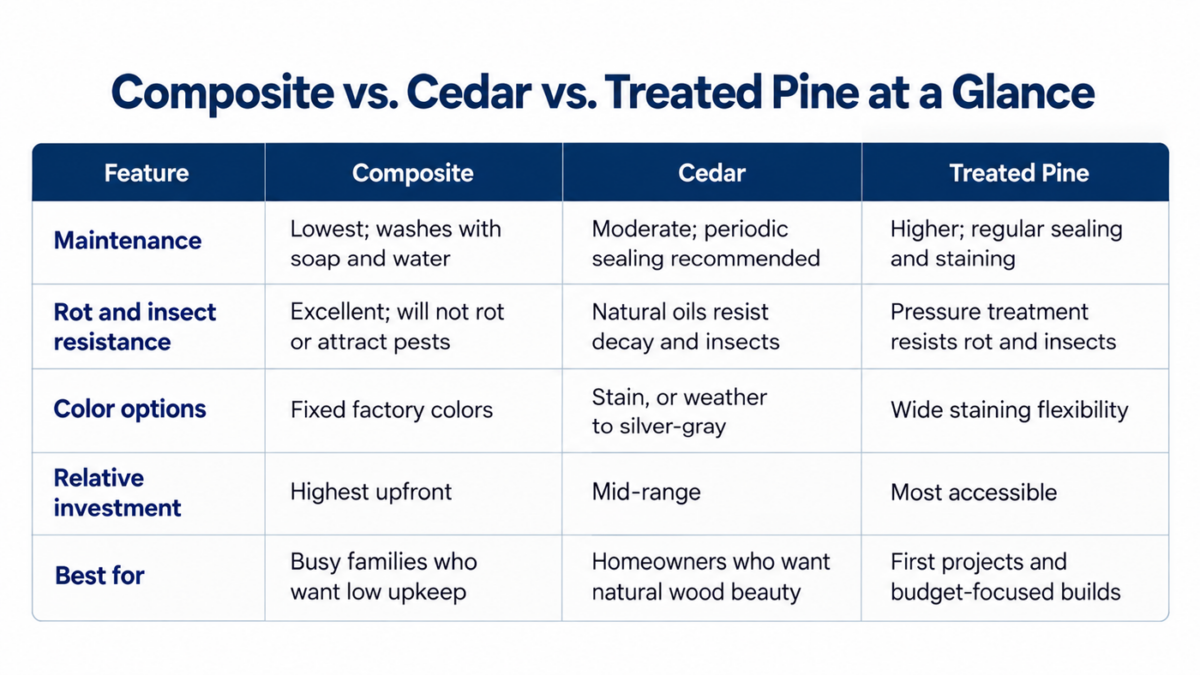
Deck Materials Compared at a Glance
Which Deck Material Handles Texas Heat Best?
Every deck surface heats up in direct San Antonio sun, and color matters as much as material. TimberTech’s own guidance is that darker colors feel hotter and lighter colors are better for hot climates. The most effective way to keep any deck comfortable is shade, which is why so many of our decks are built with a patio cover.
Our Complete Guide to Patio Covers compares the three roof styles we build in cedar and aluminum.
For more on choosing materials and projects that hold up to our summers, see our guide to the best outdoor living projects to start in San Antonio.
What Is Under the Boards Matters Too
The surface gets the attention, but the frame carries the deck. The Southern Forest Products Association recommends ground-contact-rated treated lumber for any joists or beams within six inches of the soil. Building to that standard is part of how we protect the decks we build in San Antonio and our surrounding service area.
Go Deeper on Each Deck Material
This guide is the starting point. Our Apex Advice blogs cover each material in more depth:
- Treated pine: Treated Pine Decks: Making Outdoor Living Accessible
- Cedar: Cedar Decks: Durable, Beautiful, and Built for Texas
- Composite and wood compared: Composite vs. Treated Wood: Which Works for You?
So Which Deck Material Is Right for You?
If budget leads, treated pine gives you a solid wood deck for the least upfront cost.
If you want real wood with less fuss, cedar’s natural resistance makes it the premium wood choice.
If you want the least maintenance, composite costs more now and much less of your time later.
Still undecided? That is what the free on-site estimate is for. We look at your sun exposure, how your family uses the space, and your budget, then tell you which material we would choose and why. Most deck projects run three to six weeks from signed contract to completion, and we handle permitting from start to finish.
Call (210) 699-7757 or request your free estimate online, or learn more about our San Antonio deck building services.
Frequently Asked Questions About Deck Materials
What is the most low-maintenance deck material in San Antonio?
Composite is the lowest-maintenance deck material for San Antonio homes. It never needs sanding, staining, or sealing, and routine care is mostly cleaning with soap and water. Cedar and treated pine both need periodic cleaning and refinishing to stay protected from our intense sun. Composite costs more upfront, but it saves time and finishing costs over the life of the deck.
Is cedar or treated pine better for a deck in San Antonio?
Both work well here when they are maintained. Cedar resists rot and insects naturally through its oils and grain, is lighter in weight, and has a warmer natural color. Treated pine gets its protection from pressure treatment, costs less, and is strong enough for large or multi-level decks. Choose cedar for appearance and natural durability, and treated pine for budget and size.
Can I stain a composite deck?
No. Composite decking comes with its color built in and is not designed to be stained or painted. TimberTech, for example, does not recommend either and does not cover resulting problems under its warranty. If you want the freedom to change your deck’s color later, cedar or treated pine is the better fit. With composite, choose your color carefully at the start.